Guide · Updated 28 Sep 2026

How to set up player storage on a RedM server

Storage is where a player economy keeps its stock. A trapper needs somewhere for pelts, a gang needs a stash the law cannot open, a sheriff's office needs an evidence locker. Framework inventories give you the containers; what they do not give you is ownership: who placed this chest, who may open it, and what happens when that player quits. This guide covers setting that up, and the rules that stop items from vanishing.

Three kinds of storage

KindWho owns itExample
Player storageOne character, who can share itA chest in a rented room
Job storageA job; grade decides accessSheriff's evidence locker, doctor's supplies
Shared containersNobody; anyone can openA bin behind the saloon

Player storage players place themselves

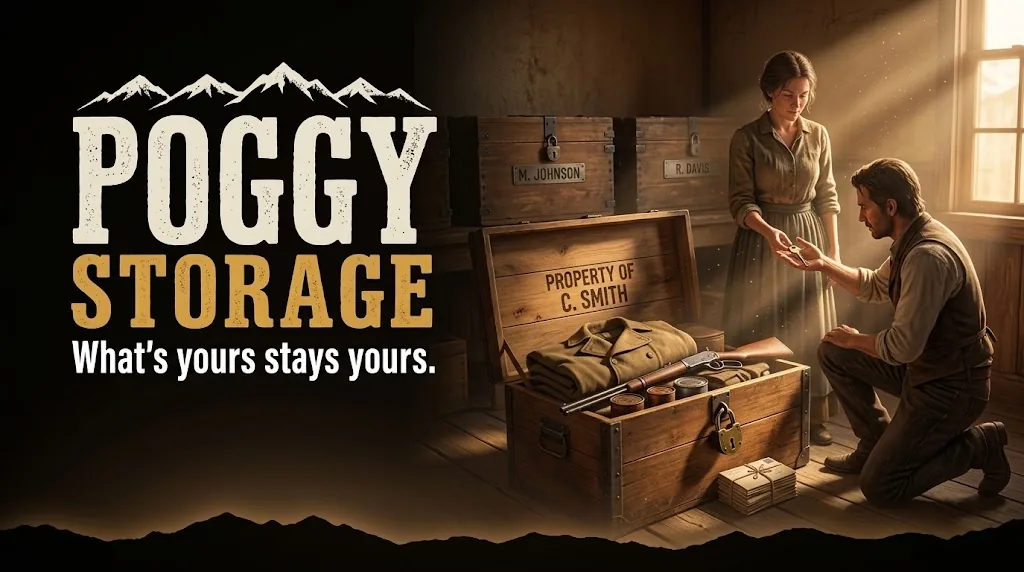
Poggy Storage (Free) is free. A player stands where they want the storage, types /createstorage, confirms, and pays the creation price. The storage appears where they stood; they open it by walking up and pressing G. The shipped defaults are sensible for a new server:

  • Creation price 5, and a player may own 2.
  • Starting capacity 200, with upgrades of 25 slots. Each upgrade costs a little more than the last (1.5, then 10% more each time).
  • Map blips, shown only for storages the player can open.
  • A storage unused for 60 days is removed when the script starts. Job storages never are.

Set the creation price to 0 for free storages. If money is tight on your server, keep the price and the owned count low: a storage is a way out of the economy for items, and every one you add is stock that is not being sold. Running a player economy covers why.

Sharing

The owner gives named players one of three levels:

  • Manager: open, deposit, withdraw, read the ledger, buy upgrades.
  • Member: open, deposit, read the ledger.
  • Basic: open only.

Access can also go to a whole job, with the player's grade deciding the level. Every storage has its own money balance and a ledger of who put in and took out what, which settles most "who took the gold" arguments before they reach staff.

Job storages

Job storages are written in the config (Config.DefaultStorages), not placed by players: an evidence locker for law, supplies for doctors, a job-locked armory. Grade 2 gets Manager and grade 1 gets Member by default, and any other grade gets Basic. They can post to Discord webhooks, which is worth doing for an evidence locker.

Shared containers

Poggy Trash Bins ($8.99) makes bins searchable for loot and gives each one a shared container anyone can open with "Take a look inside". By default bins are emptied at every restart and cannot hold weapons, so they work as a dead drop, not a vault. Staff can empty them all at once with /emptytrash.

Admin tools

Poggy Storage adds a Storages panel to /poggy: every storage in one table, to rename, resize, move, change owner, delete, manage access and see what is inside. The same is there as commands: /movestorage <id> <x> <y> <z>, /deletestorage <id> and /storageadmin show|hide. /adminshop is a free shop with every item on the server, so treat it as an item spawner and keep it to senior staff. Admin access is the ACE character_storage.admin or the groups in Config.AdminGroups.

The rule that loses items: ids are data

Items are stored against a container's id. Change the id, and the container opens empty, while the items sit in the database under the old id where nobody can reach them. It is the most common "my stash was wiped" report, and it is almost never a wipe. So:

  • Never rename a container that players have used: a trash bin's storageid, a job storage's id.
  • Deleting a storage in Poggy Storage unregisters it: the container is forgotten but its items stay in the inventory database. That is on purpose, so a mistake can be undone.
  • Back up before you change storage config. How to back up a RedM server covers that.

How each framework keeps a stash

Poggy Storage runs on all three through Poggy Core (Free), which turns each storage into the framework's own container. The differences are worth knowing:

  • VORP Core: a vorp_inventory custom inventory. Its definition lives in memory, so it is registered again on every start (poggy_core does this, and again if vorp_inventory restarts). Containers are limited by slots, not weight.
  • RSG Core: an rsg-inventory stash, saved in the inventories table. Only one player can have a stash open at a time.
  • QBCore RedM: rows in qbr-inventory's stashitems table. Nothing on a QBR server creates that table, so poggy_core prints the CREATE TABLE to run and refuses storage until it exists.

Installing it

Poggy Storage needs Poggy Core (Free) and oxmysql, and none of vorp_menu, vorp_inputs or extra inventory resources. Its table is created on first start. See how to install a RedM script for the start order.

Questions this guide answers

Is there a free player storage script for RedM?

Yes. Poggy Storage is free. Players place their own storages with /createstorage, share them with named players or a whole job, and buy capacity upgrades. It runs on VORP Core, RSG Core and QBCore RedM through the free poggy_core.

Why did items disappear from a storage after an update?

Almost always because the storage's id changed. Items are kept against the container id, so a renamed container is an empty one, while the old items sit in the database under the old id. Never rename a container that players have used.

Do player storages ever expire?

In Poggy Storage, yes by default: a player storage unused for 60 days is removed when the script starts. Job storages never expire. Both settings are in the config.

Scripts mentioned in this guide

Whole store →
Poggy Storage — Free RedM Player Storage Script
Free RedM Player Storage Script

Poggy Storage

Free player-owned storage for RedM: players buy a storage where they stand, keep items and money in it, and share it with named players or a whole job. Job storages, armories and a /poggy admin panel included.

PriceFree
Poggy Trash Bins — RedM Trash Bin Loot Script
RedM Trash Bin Loot Script

Poggy Trash Bins

Searchable trash bins for RedM: 33 preset bins plus auto-detected world bins, random loot from one list you control, a cooldown per bin, and a shared stash in every bin. VORP Core, RSG Core and QBCore RedM.

Price$8.99
Poggy Core — Free RedM Framework Core and Auto-Updater
Free RedM Framework Core and Auto-Updater

Poggy Core

The free, open-source core every Poggy script runs on, for VORP Core, RSG Core and QBCore RedM: automatic updates with config merging, tables created on start, account bans with a shared anti-cheat ban network, and one API for your own scripts.

PriceFree

RedM Script Subscriptions vs Buying Outright

The break-even maths with live prices, what cancelling does, how updates and licences work, and when each one wins.

Read the guide →

How to Set Up Law Enforcement on a RedM Server

Crime alerts and witnesses, on-duty status and counts, badges, evidence lockers, crime scene text, jail and bounties, and how much law your player count needs.

Read the guide →

How to Install a RedM Script

Download, resources folder, SQL, start order, config and the escrow licence check. Then the five common errors.

Read the guide →

Free RedM Scripts Worth Installing

Eight free scripts, what each one does, what it needs, and what it does not do.

Read the guide →

How to Back Up a RedM Server

The database, resources, configs, licence files and txData. How to automate it, and how to test the restore.

Read the guide →

How to Choose a RedM Script: Checks Before You Buy

Framework claims, performance, open config, versions, support and video. Ten checks, and the red flags that should end the sale.

Read the guide →

How to Add Items to a RedM Server

Where each framework keeps its item list and icons, how to add an item to each, and the mistakes that break scripts.

Read the guide →

RedM /me and /do Commands: Roleplay Tools Guide

Writing a good /me and /do, overhead text or chat, scene text, status labels, skillchecks instead of dice, animations, and keeping it all clean.

Read the guide →

RedM Server Event Ideas and How to Run Them

Eight events that bring players back, how to run each, when to schedule and announce them, prizes that keep the economy intact, and a checklist.

Read the guide →

RedM Admin Tools: Moderating a Roleplay Server

txAdmin, ACE permissions, framework admin menus, admin blips, reports and evidence, staff ranks, and a moderation checklist.

Read the guide →

Best RedM Scripts for a New Server

Economy, law, activities, roleplay tools and admin utilities. What to run, what it costs, and where the free options are.

Read the guide →

VORP vs RSG Core vs QBCore for RedM

Script availability, structure and inventory for each framework, and what "runs on VORP, RSG and QBCore" actually means.

Read the guide →

How to Update RedM Scripts Without Breaking Your Config

The manual routine that keeps your config safe, and the automatic route that removes the routine.

Read the guide →

RedM Server Economy: How to Balance Money, Jobs and Shops

Sources, sinks, player shops, auctions, jobs and a stipend. The model, the starting numbers and the scripts.

Read the guide →

How to Set Up Jobs on a RedM Server

Job names and grades, duty, several jobs per character, badges, and making every script agree.

Read the guide →

Cfx Escrow Explained for RedM Server Owners

Which files are encrypted, what you can still change, the licence file, and the error everyone hits once.

Read the guide →

RedM Server Performance: How to Reduce Lag

Measure first, then the usual causes: hot client loops, dead entities, unindexed queries and NPC systems tuned too high.

Read the guide →

Using Poggy Core in Your Own RedM Scripts

The free framework layer under your own resources: install, first script, menus, storage, jobs, standalone mode, diagnostics.

Read the guide →

How to Run a Player Economy on a RedM Server

Player-owned shops, auctions, taxes, moving prices and the weekly checks that keep a live economy healthy.

Read the guide →

How to Set Up Crafting on a RedM Server

Recipe chains, benches and campfires, job locks, skillchecks, telling players where ingredients come from, and pricing it all.

Read the guide →

How to Set Up Fishing on a RedM Server

What makes fishing worth playing, installing it, bait and seasons, tuning the difficulty, and pricing the catch.

Read the guide →

How to Make a RedM Server

Server artifacts, txAdmin, the licence key, server.cfg, the database, a framework, ports, admins, backups and a launch checklist.

Read the guide →

RedM Animations: Dictionaries, Scenarios, Emotes

Dictionaries, clips and scenarios, playing one from Lua, props on bones, multi-step scenes, syncing, cleanup and emotes players use.

Read the guide →

How to Handle Player Reports and Tickets on a RedM Server

Tickets in game instead of in Discord DMs: roles, replies, internal notes, the warn-kick-ban ladder and Discord posts.

Read the guide →

How to Stop Banned Players Coming Back to Your RedM Server

Account bans that match every identifier, why IP bans are a trap, and a shared network that stops a known cheater at the door.

Read the guide →

RedM Minigames: Chess, Checkers and Games Players Return To

Board games at saloon tables: rules, an AI opponent, wagers held safely, Elo ratings and where to place tables so people sit down.

Read the guide →

How to Add Emotes to a RedM Server

An emote menu players actually use: search, favourites, preview, nearby chairs and railings, custom emotes with props, and what to hide.

Read the guide →
Join the Discord Discord